
Two words appear constantly in Nigerian land adverts and are almost never explained. If you understand them, you can read a listing properly.
Begin with the problem they solve. When the Land Use Act vested land in the state, governments across the country also acquired large areas outright for public purposes — roads, schemes, future development. Land inside those acquisitions is committed. No individual can obtain good title over it, whatever the family occupying it believes and whatever they are willing to sell you.
Excision is the state releasing a defined portion of that acquired land back to the original land-owning community. It is a deliberate government act. Once excised, that portion is no longer committed, and title over it can properly be granted, transferred and registered.
A gazette is the official state publication in which the excision is recorded. It is the proof. It names the village or family, describes the area released, and gives the survey particulars. When a seller says land is excised, the honest follow-up is simple: which gazette, what number, what year, and what page. A seller who cannot answer that has told you the excision is a claim rather than a fact.
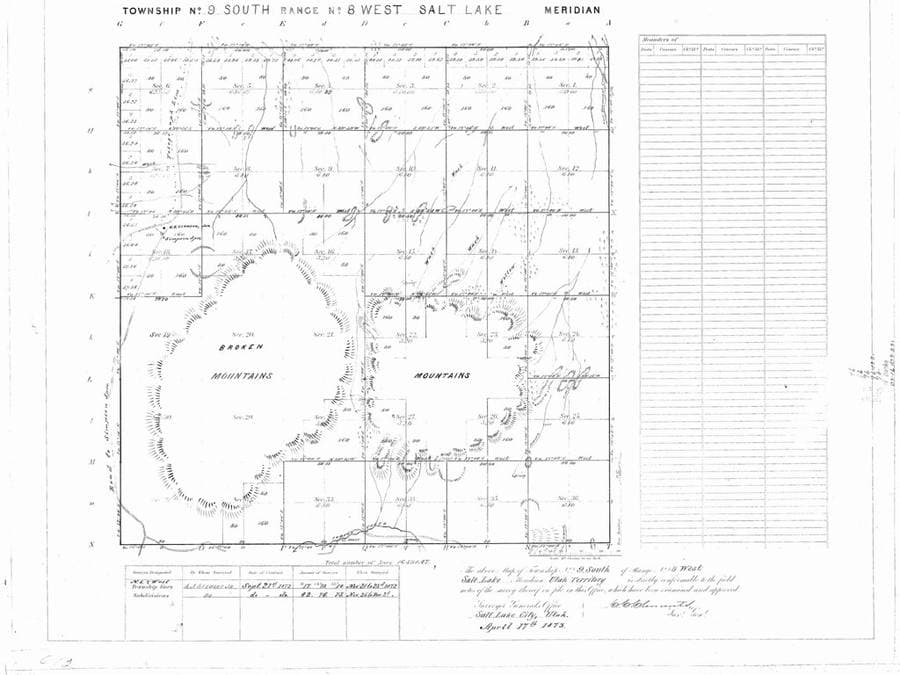
Read the gazette against the survey. This is where the market's most common disappointment lives. Excisions are granted over a defined area, and that area is frequently smaller than the land the community actually occupies and sells. A gazette can be entirely genuine and the specific plot you are being offered can still sit outside the excised portion. The document proves something real about somewhere — the survey is what proves it is about your plot.
The way to close that gap is charting. Your surveyor submits the survey plan to the office of the state Surveyor-General, and it is checked against the government's own records to establish what the land falls within: an excision, a committed acquisition, a road setback, a drainage right of way. Charting is cheap and quick relative to what it tells you. Anyone buying land without a C of O should treat it as compulsory rather than optional.
Where does excised land sit against a Certificate of Occupancy? Below it, but legitimately so. Land properly excised and gazetted, held by the family that received it, sold with a registered survey and a deed, is a real position with a real path forward — the buyer or the estate can apply for a certificate over it in due course. It is not the same as holding one already, and the price should reflect the difference.
Two practical cautions. A gazette is not a title document; it says land was released to a community, not that any particular person within that community may sell it to you. Establish who within the family has authority to sell, and get the signatures of the accredited representatives rather than of whoever appeared on the day. And be wary of an excision described as pending or in process. Applications can sit for years and many are never granted. Pending is not a state of title. It is a hope, and hopes should not be priced as facts.
Still deciding what to buy?
Tell us the size, the area and the budget. We will tell you what fits and what the documentation position is on each one.